Soil properties of a successful garden

This article was originally written as part of a series for the University of Vermont Extension Master Gardener Program (https://www.uvm.edu/extension/mastergardener).
What makes good soil and what does “good” mean? Most of us would likely answer that good soil is full of readily available nutrients for our vegetables and flowers to uptake and robustly grow.
There is, of course, more to good soil than high nutrients. Otherwise, why would we bother to grow plants in soil at all?
Soil, being an ecosystem, is teaming with life that supports plant growth, if conditions are right. The physical and chemical properties are what support soil biology, which in turn supports plant growth. Soil texture, structure, drainage, water and air are all important to consider, whether you are growing vegetables or flowers.
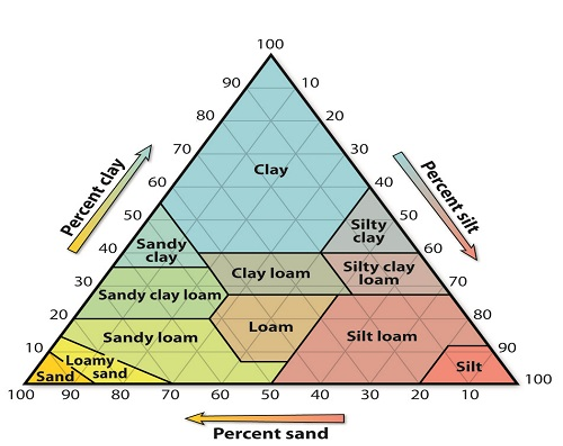
Texture is the relative distribution of different sized soil mineral particles. Texture mainly depends on the amounts of sand, silt and clay present. Loam is the ideal combination of these soil minerals.
The combination of minerals also leads to other noticeable changes in soil. For example, sandier soils hold less water, warm up more quickly and have more air than those with more clay.
Structure refers to the aggregation of soil particles. Healthy soil is similar to a sponge in that it consists of aggregates separated by pores and channels. In these pores, soil organisms live, roots spread and water and air collect. Soils with good structure often have healthy biological communities that include bacteria, fungi, micro-organisms and macro-organisms.
Drainage is the rate that water moves through the soil. Too much or too little drainage is equally undesirable. Macro-pores promote good aeration and increase drainage, whereas micro-pores help retain water. Ideally, one-half of the soil’s pore space is occupied by water.
Lastly, air. These should be familiar to most gardeners, but it may come as a surprise that high quality soil has a substantial amount of air between soil aggregates. A soil that is best for plant growth contains about 50% solid material and 50% pore space. Imagine your garden bed and think that ideally 50% of that volume is the pores surrounding the soil aggregates.
In Vermont, many of us are plagued with clay-dominated soils. In those cases, adding organic matter (e.g., compost) will help improve soil texture and structure.
We can also learn to limit practices that negatively impact soil properties such as routine tilling and compaction through walking or driving. Ultimately, the more we learn about soil properties, the more we understand that “good” soil extends beyond fertility. Happy gardening!